

The Museum
A private collection, open to everyone
Gyan Museum holds more than 2,500 objects spanning 3,000 years, on a single floor in Sitapura, Jaipur. It was built for one collection, by the family that inherited it, and it welcomes visitors Monday to Saturday for guided visits, booked ahead.
Visits to Gyan Museum are guided and booked ahead, so someone is ready to welcome you. Please book before you travel.
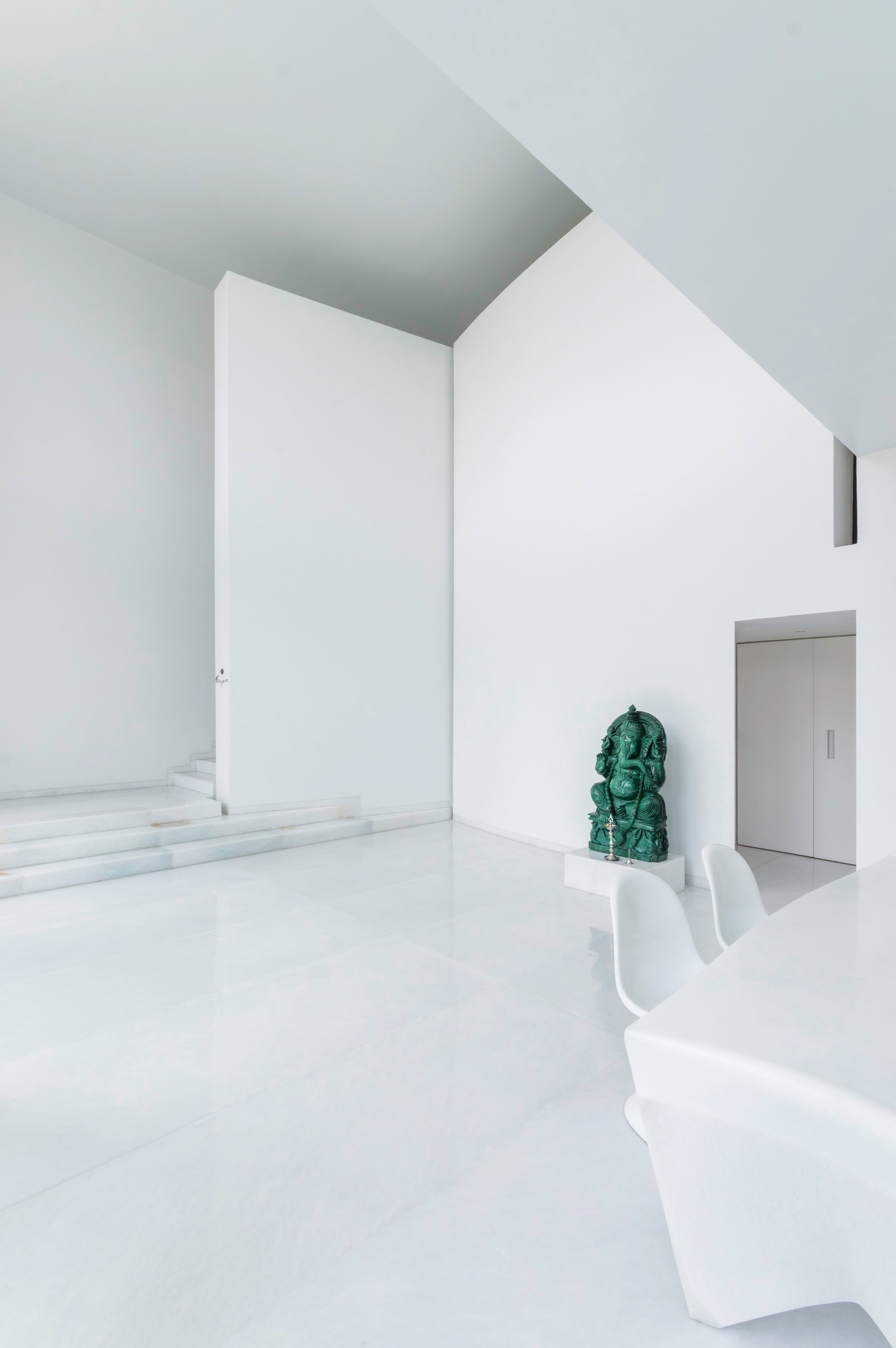
The museum, in its own words
“First-of-its-kind in Jaipur, Gyan Museum stands as one of India’s most distinctive private concept museums, showcasing textiles, jewellery, manuscripts, arms, silverware and more. Home to over 2500 rare artefacts, the collection spans nearly 3000 years of cultural heritage, bringing together exceptional works from Indian and international origins within a single, thoughtfully curated space.”
The museum at a glance
Every figure below is the museum’s own or is cited to a named publication. Where sources disagree, we say so rather than choosing.
- Founder
- Gyan Chand Dhaddha, 1940–2004, described by the museum as a naturalist, a collector and gemmologist
- Objects
- More than 2,500, of which the museum says three quarters are Indian and one quarter from elsewhere
- Span
- About 3,000 years. The New York Times reported objects “ranging from 100 to 3,000 years old”
- Galleries
- On one floor, in a circular plan
- Building
- About 15,000 square feet, built over 4 years
- Designer
- Paul Mathieu, whose profile records the museum as AD100 and AD50 awarded
- Inaugurated
- 28 December 2015, by Suresh and Arun Dhaddha
- Opened to the public
- 17 November 2016, by Princess Diya Kumari
- Where
- G-1/21-23, Gems and Jewellery Zone, EPIP, Sitapura Industrial Area, Jaipur, Rajasthan 302022, India
- Hours
- Monday to Saturday, 10am–6pm · Guided visits, booked ahead
This page draws on the museum’s own published writing, on Business Standard, The New York Times, Architectural Digest India, LuxuryFacts and the museum’s launch release. Every claim is either cited here or marked as unconfirmed.
Two opening dates, both true
Published accounts of this museum give two founding dates, and both are right. The family inaugurated the building on 28 December 2015. It opened to the public on 17 November 2016, when Princess Diya Kumari cut the ribbon and the band Rajasthan Roots played.
The people
Gyan Chand Dhaddha
Founder
Gyan Chand Dhaddha (1940–2004) is described by the museum as a naturalist, a collector and gemmologist. At sixteen his father gave him two jewelled silver hookah mouthpieces; he collected for five decades afterwards. The museum that carries his name opened in 2016, twelve years after his death, and is built on what he assembled.
Suresh Dhaddha
Co-founder
The elder son of the founder. He and his brother Arun opened their father’s storerooms after his death in 2004, and inaugurated the museum on 28 December 2015.
Arun Dhaddha
Co-founder
“After my father’s demise, my elder brother Suresh Dhaddha and I saw it as our moral responsibility to bring his dream to reality.” He met the designer Paul Mathieu at the Metropolitan Museum of Art in New York in 2010, and describes the museum’s programme as three-month exhibitions of contemporary work, with workshops and talks.
Paul Mathieu
Designer of the museum
French-born, working between New York, Aix-en-Provence and Udaipur. He met the Dhaddha family at the Metropolitan Museum of Art in 2010; the building took four years. His own profile describes the museum as AD100 and AD50 awarded. He is a designer rather than an architect, which is how the museum and he both put it — Business Standard’s “Parisian architect” is the outlier.
Read further
The collector
Two hookah mouthpieces at sixteen, five decades of buying, and a basement his sons had to open after his death.
The building
A circular plan, a rock crystal handle, a jade Ganesh and a marble staircase that quotes a Rajasthani fort.
Press
26 citations with publication and date, from Robb Report India and The New York Times down.
Press kit
The fact sheet, the image terms and the contact, for anyone writing about the museum.
Notable visitors
The names the museum publishes — names only, without consent to publish more.
The family
Four generations, a jewellery house founded in the 1980s, and the atelier the museum stands inside.
Visiting
The museum is open Monday to Saturday, 10am to 6pm. Visits are guided and booked ahead. Sitapura is about thirty minutes from the old city, so tell us when you’re coming and we’ll be ready.